
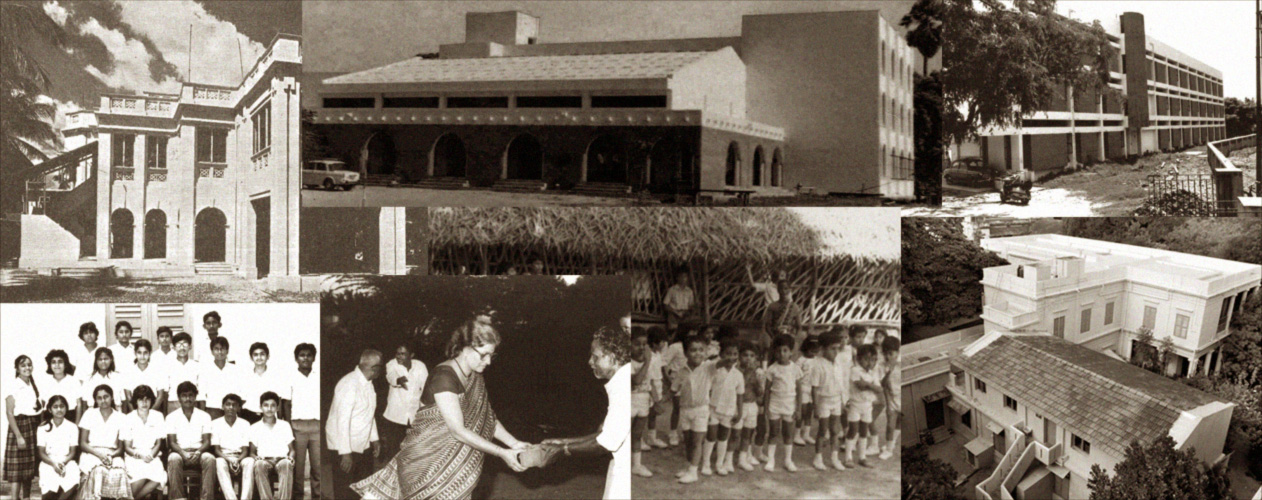
How It All Began
In 1972 at Edward Elliot’s Road (Radhakrishnan Salai), the morning assembly was held under the reassuring presence of a beautiful old mango tree.
KIT Thomas himself taught English, voted by many students of the time as some of the best learning sessions in Sishya. Geography with Mr. Mani’s hand-drawn maps, English literature – particularly Shakespeare – with Julius Caesar and his court coming alive in Roman togas fashioned with white bed sheets with black borders sewn in, Mr. Vincent’s inspiring lectures, social studies, general knowledge, Bournvita Quiz, the intimacy between the teachers and the students, the bonding amongst the small batch of 13 students (the joining batch of 1973), the excitement of learning, all characterize the Sishya ethos of the seventies.
The First Batch
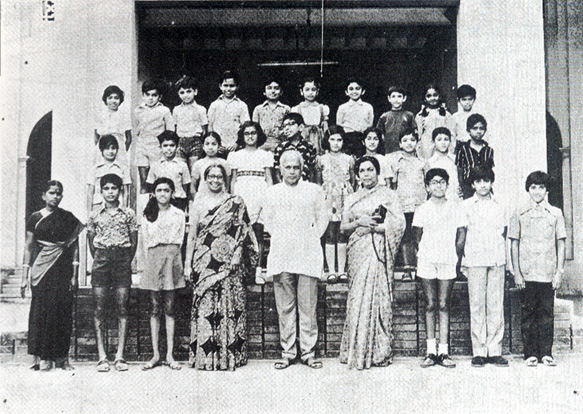
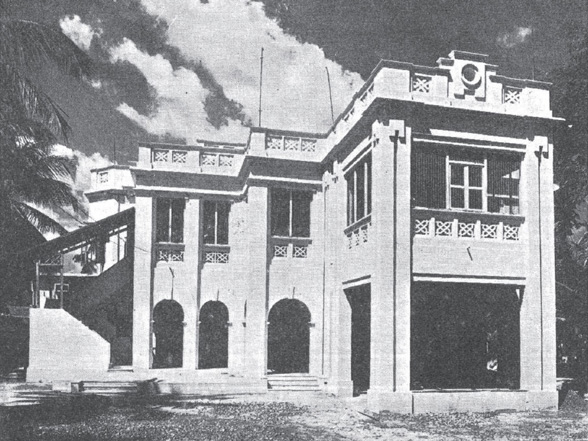
In 1974, the Council for Indian School Certificate Examination, granted the school affiliation, thereby enabling it to present its first batch of students for the ICSE examination the following year. School days became shorter with just one break.
Fetes that used to be characterized by stalls fashioned with the versatile bed sheet and mama’s or teacher’s home-made delights, wore a new look as modern day trade stalls replaced the home spun ones; election campaign posters that were once hand drawn by loyal ‘junior’ students gave way to digitized productions.
A Welcome Change
Inevitably the old made way for the new to keep pace with changing times during the eighties.
It was in 1976 that Sishya moved from its rented premises on Radhakrishnan Salai to its own five acre campus at the Ramalayam Annexe in Adyar. Although the 14 lakhs required for the purchase of this land parcel was raised through loans, it was a far-sighted move and one that has left Sishya richer in more ways than one.
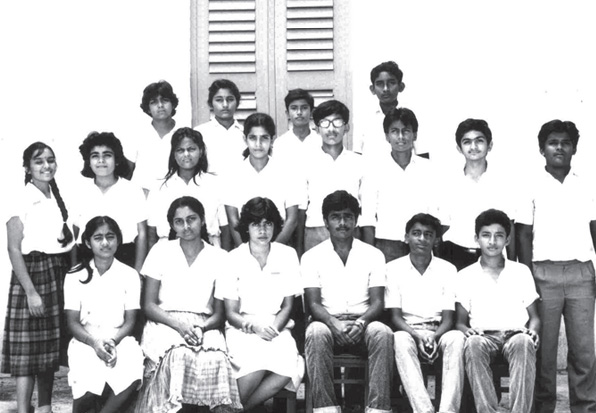
Student House names, Green, White and Orange morphed into Sutlej, Godavari, Narmada and Cauvery—four houses students are grouped into even today.
In 1986, the second part of ICSE, i.e.,Indian School Certificate, was added. This pattern of syllabus continues.
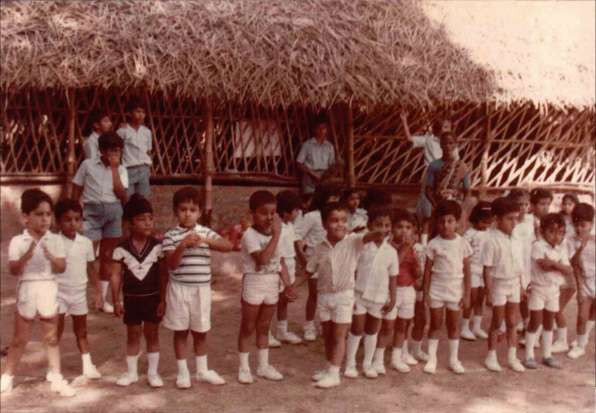 The buildings on the campus were built over a period of time. Classes were initially held in thatched hut classrooms which came with singular side benefits for the students. For one, each had its own vegetable patch at the back where the students not only grew different vegetables but also learnt about insects and bugs which they were able to observe first hand.
Second, there were many creepy crawlies in the thatched roofs. Every once in a while one would respond to the silent but imploring gaze of the students and fall off the roof with a thud, successfully prompting a huge ruckus and the subsequent end of class.
The open area amidst the cluster of huts with the open stage was the setting for many exciting activities—plays, elocutions, debates, and quizzes. The entire school would gather there during the last two periods of every Friday. Students would pick up the tiny chairs from the primary classes to sit on, and if they ran short of those, would plonk themselves on the slides which proved to be great vantage points. Ms. Hensman, the enthusiastic music teacher, got teachers to enact nursery rhymes on this open stage to entertain the children. Ms. Cherian was little Miss Muffet and Mr. Jayakumar, the spider; Mr. Sathyadas, Mary, followed by Ms. Kunjamma, his lamb! The kitchen band ensemble was another popular feature that was enjoyed in equal measure by the children and the teachers.
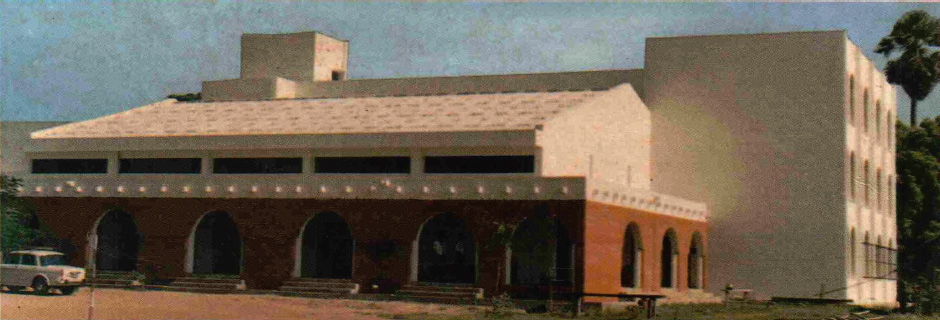
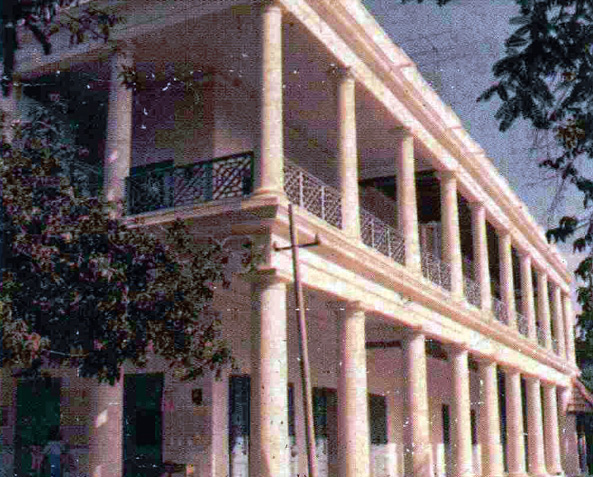
The present sports room was the staff room at the time where Prabhakaran served mid-morning coffee from his house next door. Some classes were held above this staff-room and others in the old Headmistress Block. The diminutive gentleman Mr. Gopalakrishnan sat under the stairs assiduously working the accounts. On the first floor was an odd assortment of rooms which included the physics, chemistry and biology labs.
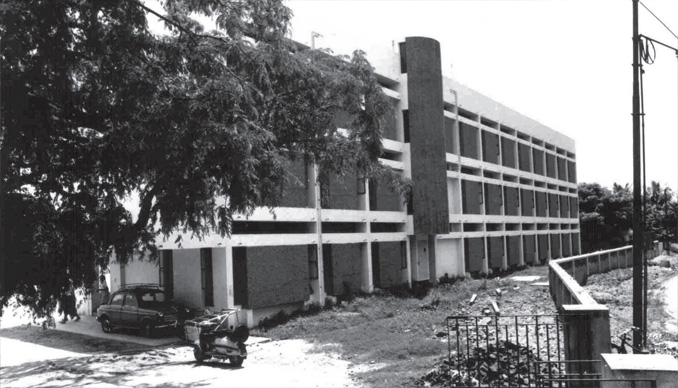
A cozy hideaway above the old Accounts Office was the library, and a narrow long room above Mr.Thomas’ room served as the second staff room. Ms. Cherian’s famous bed-sitter was at the forward end, affording her a good view of the entire school.
By the end of the nineties, Sishya had grown to a comfortable size and had created a niche for itself in the Chennai scene. It was popular with a certain sort of parent but also had a reputation for being different. As the economic scene in the country changed and the mantra of globalization and opening the economy came to the forefront so too did the demand for seats in Sishya increase exponentially. Unable to cater to the increased requirements in the existing campus , the KIT Thomas Educational Society linked up with another trust to provide the academic inputs. The Sishya Brand had now become well known and the new school was full from its inception.


